

Apartment Moving in Colorado Springs: What Renters Need to Know
Moving in or out of an apartment comes with a different set of challenges than moving between houses. Elevator reservations, narrow hallways, parking restrictions, lease overlap, and security deposits all add layers of complexity that house-to-house moves do not have. If you are planning an apartment move in the Colorado Springs area – whether it is your first rental near UCCS, a unit in the Briargate corridor, or a downtown loft – here is what you need to know to make it go smoothly.
How Apartment Moves Are Different
On the surface, an apartment move seems simpler than a house move. Fewer rooms usually means less stuff, and less stuff usually means a faster move. But apartments introduce logistical issues that can slow things down significantly if you are not prepared.
- Building access restrictions. Many apartment complexes and managed buildings in Colorado Springs require advance notice before a move. Some require a certificate of insurance (COI) from your moving company before they will allow a crew to enter. Others limit moving to specific days or time windows – typically weekday business hours – to minimize disruption to other residents.
- Elevator reservations. If you are above the second floor in a building with an elevator, you may need to reserve it for your move. Buildings often require 48 to 72 hours of advance notice. Without a reservation, you risk waiting for a shared elevator or being told to reschedule.
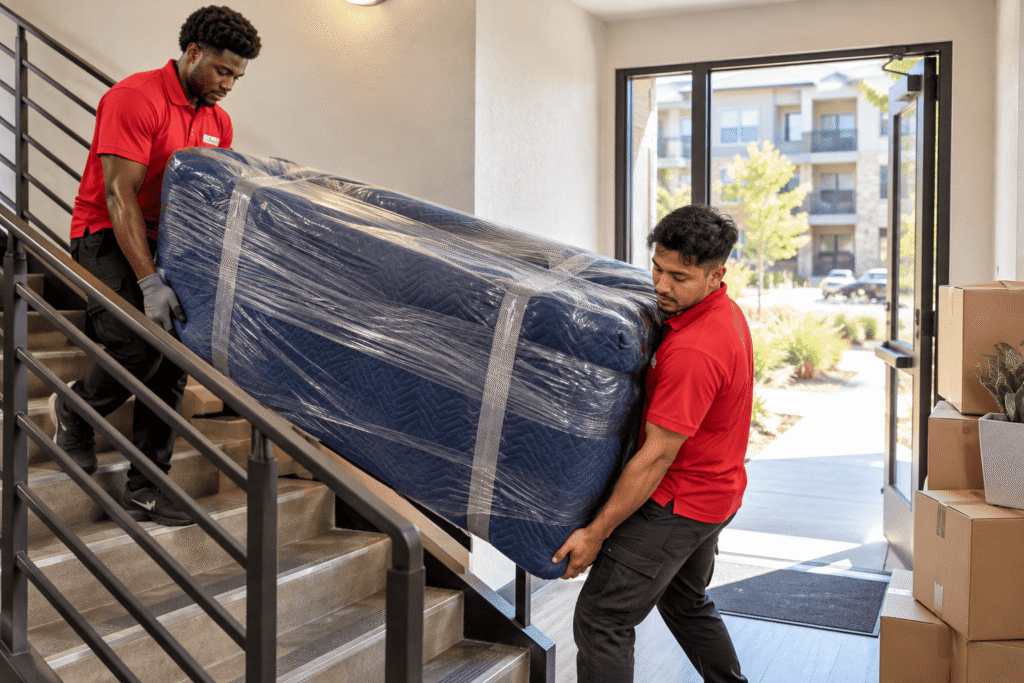
- Stair carries. If there is no elevator, every item has to be carried up or down stairs. This adds time to the move and may carry an additional fee depending on the floor. A third-floor walkup takes noticeably longer than a ground-level unit, which directly affects hourly moving costs.
- Parking and truck access. Moving trucks need space. If your complex does not have a loading zone or if street parking near your building is limited, coordinate with your property manager. Some buildings allow movers to use a designated loading dock. Others require you to reserve a parking spot or cone off street space. In downtown Colorado Springs, parking is tighter and may require a city permit for a moving truck.
- Tight spaces. Narrow hallways, small doorways, and tight stairwells are standard in many apartment buildings. Large furniture – sectional sofas, king mattresses, oversized dressers – may need to be disassembled or maneuvered carefully. Experienced apartment movers know how to navigate these challenges without damaging walls, banisters, or the furniture itself.
Handling Your Lease and Move-Out Timeline
Timing is one of the trickiest parts of an apartment move. Unlike a house sale where you have some flexibility on the closing date, apartment leases have fixed start and end dates that rarely align perfectly.
- Lease end date vs move-in date. If your old lease ends on the 31st and your new place is not available until the 2nd, you have a gap. Plan ahead by negotiating an early move-in with your new landlord, extending your current lease by a few days (if the complex allows it), or arranging short-term storage for your belongings.
- Overlapping leases. Some renters intentionally overlap leases by a few days so they can move at a comfortable pace without rushing to get everything out in a single day. This costs an extra few days of rent but eliminates the stress of a same-day turnaround.
- Move-out inspection. Most complexes schedule a walkthrough to assess the condition of your unit. Clean thoroughly before this inspection – walls, appliances, floors, closets, and bathrooms. Patch small nail holes, clean inside the oven and fridge, and check for any damage that might cost you part of your security deposit.
- Notice requirements. Most Colorado leases require 30 to 60 days of written notice before you move out, even if your lease is expiring. Missing this deadline can result in automatic renewal or penalties. Check your lease agreement and provide notice in writing well before the deadline.
What to Do Before the Movers Arrive
Apartment moves go faster when you prepare your space before the crew shows up.
- Disassemble large furniture. Take apart bed frames, remove table legs, and break down shelving units. Bag all hardware and label it. This saves your movers time and reduces the risk of items getting stuck in narrow apartment doorways.
- Pack everything ahead of time. If you are handling your own packing, have every box sealed, taped, and labeled before moving day. Movers charging by the hour should be spending that time loading and driving – not waiting for you to finish packing your kitchen cabinets. If you would rather skip the packing entirely, professional packing services can handle it the day before.
- Clear pathways. Move shoes, rugs, and clutter out of hallways and entryways. Prop open doors that are along the route from your unit to the truck. The faster the crew can carry items in and out, the less time the move takes.
- Protect common areas. If your building requires floor runners or door frame protectors in hallways and elevators, confirm whether your movers provide these. Most professional moving companies bring them standard, but it is worth asking.
- Notify your building. Confirm your reservation for the elevator, loading zone, and any time windows. If a COI is required, request it from your moving company at least a week before the move so there is time to get it to building management.
How Much Does an Apartment Move Cost in Colorado Springs?
Apartment moves are typically on the lower end of the cost spectrum because of the smaller volume of belongings, but the final number depends on a few key factors.
- Studio or one-bedroom apartment: 2 to 3 hours with a two-person crew. Estimated cost: $250 to $600.
- Two-bedroom apartment: 3 to 4 hours with a two-person crew. Estimated cost: $400 to $900.
- Three-bedroom apartment or townhome: 4 to 6 hours, possibly with a three-person crew. Estimated cost: $700 to $1,400.
These ranges assume a local move within the Colorado Springs area. Factors that push costs higher include upper-floor units without an elevator, long carry distances from the unit to the truck, bulky or specialty items, and packing services.
The most reliable way to know your exact cost is to request a free estimate that accounts for your specific apartment, floor level, and the distance to your new place.
Tips for First-Time Apartment Movers
If this is your first apartment move – or your first time hiring professional movers – these tips will help:
- Do not assume a smaller move means you do not need movers. Even studio apartments have heavy items: mattresses, dressers, desks, TVs. Carrying these down three flights of stairs alone is a recipe for injury. A two-person crew can handle a studio in a couple of hours for a few hundred dollars.
- Measure before you move. If you are moving into a new apartment, measure the doorways, hallways, and stairwells before assuming your existing furniture will fit. A king bed frame that fit in your old ground-floor unit may not clear the tight stairwell in your new walk-up.
- Take photos before you leave. Document the condition of your old apartment – walls, floors, appliances, fixtures – before the movers start carrying things out. Do the same when you arrive at your new place. Photos protect you in disputes over security deposits and pre-existing damage.
- Ask about renter’s insurance. Renter’s insurance is separate from the mover’s liability coverage. If you do not already have a renter’s policy, getting one before your move protects your belongings against damage, theft, and loss – not just during the move but afterward.
- Time it right. End-of-month and weekend moves are the busiest and most expensive. If your lease allows flexibility, moving mid-month or on a weekday can save you money and give you better availability with movers.
Frequently Asked Questions
Do apartment movers charge extra for stairs?
Some movers include stair carries in their standard rate, while others charge a per-flight fee, typically $25 to $75 per flight. Ask about stair fees when requesting your estimate so there are no surprises.
Can movers handle a third-floor walkup?
Yes. Professional movers handle walkups regularly. It takes longer than a ground-floor move, which increases the hourly cost, but experienced crews are equipped for it. If you are above the third floor without an elevator, make sure your mover knows the floor level when quoting.
How do I reserve an elevator for my move?
Contact your building manager or property management company at least 48 to 72 hours before your move. Some buildings have an online reservation system. Others require a written request. Ask about time limits – some buildings only allow elevator holds for a set number of hours.
What is a certificate of insurance for a move?
A COI is a document from the moving company’s insurance provider that proves they carry liability coverage. Many apartment buildings and condo associations require one before allowing movers into the building. Ask your mover for a COI as soon as you book – they should be able to provide one within a few business days.
Should I tip movers for an apartment move?
Tipping is not required but is appreciated. For a quick apartment move – two to three hours – $20 to $30 per mover is a standard gesture for good service.
Book Your Apartment Move
Apartment moves have their own quirks, but with the right preparation and the right crew, you can be settled into your new place in a single morning. Fatboy Slims Moving Company handles apartment moves across Colorado Springs every week – from student housing near Fort Carson to high-rise units downtown. With over 800 five-star reviews and transparent hourly pricing, we make apartment moves simple. Get your free estimate and lock in your date.