
When Do You Need Storage During a Move?
Not every move is a clean handoff from one home to the next. Lease end dates do not always align with closing dates. Renovation timelines slip. Temporary housing does not fit a houseful of furniture. When there is a gap between moving out and moving in, storage fills it – but knowing when you actually need it, what type to use, and how much it costs helps you make a smart decision instead of a panicked one. Here is how to figure out whether storage makes sense for your move.
Common Situations That Require Moving Storage
Most people do not start a move planning to use storage. It usually becomes necessary because of a timing issue or space constraint that surfaces during the planning process. Here are the most common scenarios:
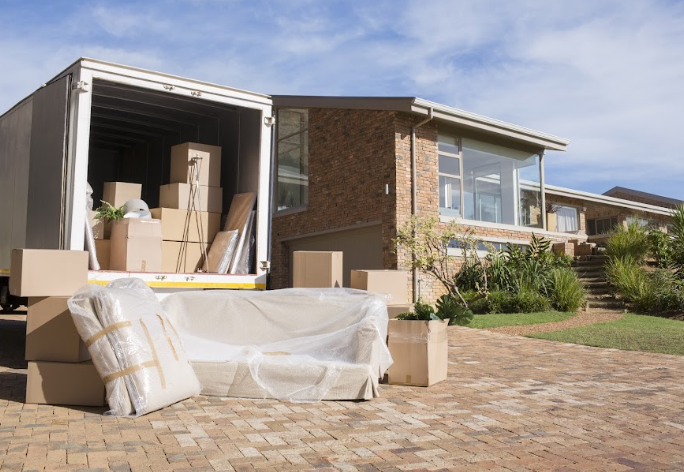
- Your move-out and move-in dates do not match. This is the most frequent reason people need storage during a move. Your lease ends on the 31st, but your new home does not close until the 15th of the following month. That two-week gap means your belongings need somewhere to go. Even a gap of a few days can require storage if you have no alternative place to keep your things.
- You are selling a home and staging it. Real estate agents consistently recommend decluttering and staging a home before listing it. Moving excess furniture, personal items, and clutter into storage makes the home show better and can lead to a faster sale at a higher price. Once the sale closes, your belongings move directly from storage to your new home.
- Your new home is being renovated. If you are buying a home that needs work before you can move in – new flooring, kitchen remodel, painting – storing your furniture during the renovation protects it from dust, paint, and damage. It also gives contractors more room to work efficiently.
- You are downsizing and need time to decide. Moving from a four-bedroom house into a two-bedroom condo means not everything fits. Storage gives you breathing room to sort through belongings, sell or donate what you do not need, and avoid making rushed decisions you might regret.
- You are in temporary housing. Military PCS moves, corporate relocations, and cross-country job transitions often involve a period in temporary housing – a furnished apartment, a hotel, or a relative’s guest room. A fully furnished temporary space does not need your dining table, bookshelves, and sectional sofa. Storage keeps your belongings safe until you land in a permanent home.
- You are moving long-distance and delivery is delayed. Long-distance moves sometimes involve delivery windows of one to two weeks. If you arrive at your destination before your shipment, you may need short-term storage on the origin or destination end.
- You are combining households. When two people move in together, there is often duplicate furniture and more belongings than the shared space can hold. Storage gives you time to figure out what stays without cramming two households into one home on day one.
Types of Storage Available During a Move
Not all storage is the same, and the right type depends on how long you need it, how much you are storing, and how convenient access needs to be.
- Traditional self-storage units. These are the standard storage facilities you see in every city. You rent a unit by the month, and you are responsible for transporting items to and from the facility. Units come in sizes from 5×5 (closet-sized) to 10×30 (large enough for a full household). In Colorado Springs, you will find facilities throughout the city – from Powers Boulevard to Fountain and the north end near Monument.
- Portable storage containers. Companies deliver a container to your home. You load it at your pace, and then the company picks it up and stores it at their facility. This option eliminates the need to rent a truck separately and works well for people who want to load on their own schedule.
- Moving company storage. Many professional moving companies offer storage services as part of a move. Your belongings are loaded onto the truck, transported to a secure warehouse, and held until you are ready for delivery. This is the most seamless option because you hire one company for the entire process – move and storage – instead of coordinating between a mover and a separate storage facility.
- Climate-controlled storage. Colorado’s temperature swings – hot summers, cold winters, and low humidity year-round – can affect certain belongings. Electronics, wooden furniture, musical instruments, leather goods, photographs, and artwork benefit from climate-controlled storage, which maintains a stable temperature and humidity level inside the unit.
How Long Will You Need Storage?
The length of your storage need determines which option makes the most financial sense.
- A few days to two weeks. This is common with lease-gap situations and closing delays. Moving company storage or a portable container is usually the most convenient and cost-effective for very short terms, since you avoid the overhead of setting up a self-storage rental.
- One to three months. Renovation delays, staged home sales, and temporary housing situations often fall in this range. A self-storage unit or moving company warehouse storage both work well. Compare monthly rates and factor in the cost of transporting items to and from the facility if using self-storage.
- Three months or longer. Extended storage during a long job transition, a major renovation, or an uncertain housing timeline benefits from a self-storage unit where you can access your belongings when needed. Look for facilities that offer discounted rates for longer commitments.
How Much Does Moving Storage Cost in Colorado Springs?
Storage costs depend on unit size, location, and whether the unit is climate-controlled.
Self-storage units in Colorado Springs:
- 5×5 unit (25 sq ft – closet): $40 to $75/month
- 5×10 unit (50 sq ft – small bedroom): $60 to $120/month
- 10×10 unit (100 sq ft – one-bedroom apartment): $100 to $180/month
- 10×15 unit (150 sq ft – two-bedroom home): $130 to $220/month
- 10×20 unit (200 sq ft – three-bedroom home): $160 to $280/month
- 10×30 unit (300 sq ft – large home with garage items): $200 to $350/month
Climate-controlled units typically cost 20 to 30 percent more than standard units.
Moving company storage varies by provider but often includes a monthly warehouse fee plus a handling fee for loading and unloading items into the warehouse. This can range from $150 to $400+ per month depending on volume. The advantage is that your belongings stay on the mover’s truck or in their warehouse – you do not need to make a separate trip.
Portable containers typically run $100 to $250 per month for the container itself, plus delivery and pickup fees.
What to Store and What to Keep With You
When splitting your belongings between storage and what you will have access to, be intentional about what goes where.
Keep with you:
- Medications and medical devices
- Important documents (IDs, passports, financial records, insurance policies)
- Valuables (jewelry, small electronics, irreplaceable photos)
- A week’s worth of clothing
- Basic kitchen items if you will be in temporary housing
- Children’s essentials (favorite toys, school supplies, comfort items)
- Work equipment (laptop, monitors, chargers)
Put in storage:
- Furniture you will not need until the permanent move
- Seasonal items (holiday decorations, winter gear, patio furniture)
- Duplicate household items when combining households
- Garage and workshop tools
- Books, decor, and non-essential kitchen items
- Excess linens and bedding
How to Protect Your Belongings in Storage
Whether you are storing for a week or six months, a few precautions keep your belongings in the same condition they went in.
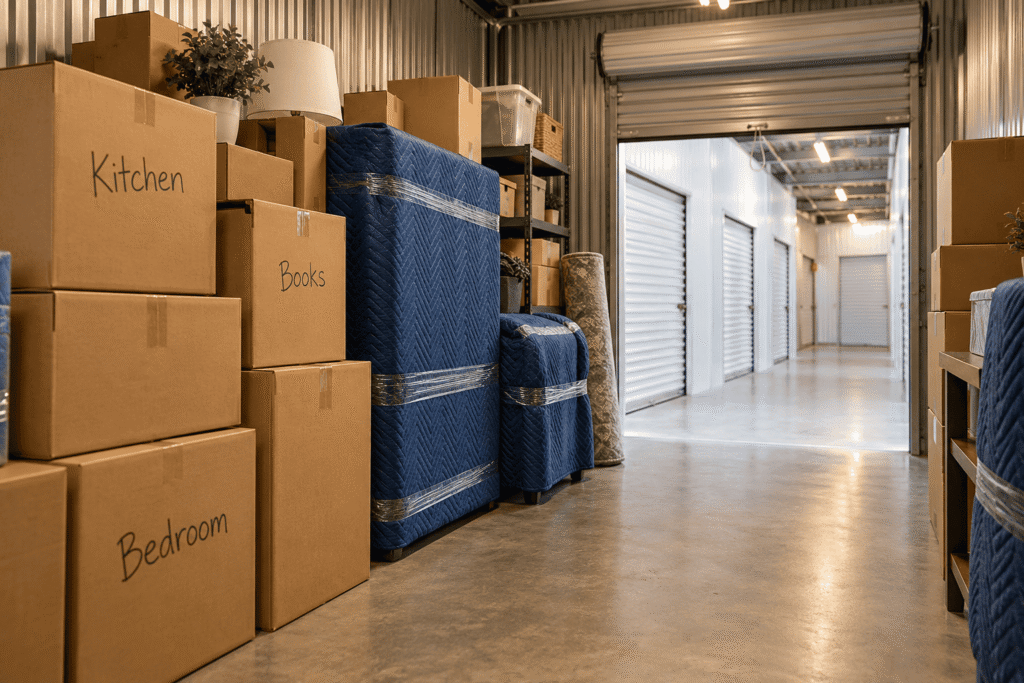
- Use quality packing materials. Wrap furniture in moving blankets. Use sturdy boxes – not grocery store castoffs that sag under weight. Seal boxes with quality tape to keep out dust and pests.
- Do not store prohibited items. Flammable liquids, perishable food, hazardous chemicals, and pressurized cans should never go into a storage unit. Most facilities prohibit these, and storing them creates a safety risk for everyone at the facility.
- Elevate items off the floor. Place pallets, boards, or plastic sheeting under boxes and furniture to protect against moisture – especially in ground-level units without climate control.
- Leave a pathway. Stack and organize your unit so you can access items in the back without unpacking the entire space. Store items you might need sooner (seasonal clothes, important boxes) near the front.
- Consider insurance. Your homeowner’s or renter’s insurance may cover items in storage, but check your policy. If coverage is limited, the storage facility or your mover may offer supplemental insurance.
- Use a lock you provide. Most self-storage facilities require you to bring your own lock. Use a high-quality disc lock designed for storage units rather than a standard padlock.
Frequently Asked Questions
Can my moving company handle storage too?
Yes. Many moving companies offer storage as part of the move. Your belongings are loaded once, stored in a secure warehouse, and delivered when your new home is ready. This eliminates double handling and keeps the entire process under one company.
How do I know what size storage unit I need?
A rough rule of thumb: a 10×10 unit holds the contents of a one-bedroom apartment. A 10×15 unit fits a two-bedroom home. A 10×20 handles a three-bedroom home. If you are only storing part of your household, scale down accordingly. Most facilities can help you estimate based on what you are storing.
Is climate-controlled storage worth the extra cost?
In Colorado, it depends on what you are storing and how long. For a two-week gap between leases, standard storage is usually fine. For several months – especially over a hot summer or cold winter – climate control protects wood furniture from cracking, electronics from moisture damage, and leather from drying out.
What happens if I need to access my items while they are in storage?
With self-storage, you have access during facility hours (some offer 24/7 access). With moving company warehouse storage, access is more limited – you typically need to schedule a time. If regular access matters to you, self-storage may be the better fit.
Can I store items during a home renovation?
Absolutely. This is one of the most common reasons people use storage. Moving furniture and belongings out of the renovation zone protects them from dust, paint, and contractor traffic, and gives the work crew unobstructed space.
Get Storage With Your Move
If your move involves a gap, a delay, or a space constraint, we can help. Fatboy Slims Moving Company offers storage services that integrate directly with your move – one crew, one company, no double handling. Whether you need a few days of storage between leases or a few months during a renovation, we keep your belongings secure until you are ready. Get your free estimate and we will build storage into your move plan.