

Full-Service Packing vs. DIY: Is It Worth Paying For?
When you’re planning a move, one of the first real decisions is whether to pack yourself or pay for full-service packing – and the full-service packing vs. DIY question comes down to more than just price. It’s a trade-off between money, time, and risk, and the right answer depends on your home, your schedule, and what you’re moving. This guide compares both options honestly, lays out when each one makes sense, and helps you decide whether professional packing is worth it for your Colorado move.
The goal isn’t to talk you into packers or out of them – it’s to help you make the call with clear eyes about what each choice actually costs you.
The real trade-off: money vs. time vs. risk
Every packing decision balances three things:
- Money – DIY packing saves on labor, and that’s its main appeal.
- Time – packing a home well takes far longer than most people estimate, often days of evenings and weekends.
- Risk – professionally packed items are packed by people who do it daily, with the right materials, which lowers the chance of breakage in transit.
DIY wins on money. Full-service wins on time and, usually, on risk. Which one wins overall depends on how you weigh those three for your specific move.
What full-service packing actually includes
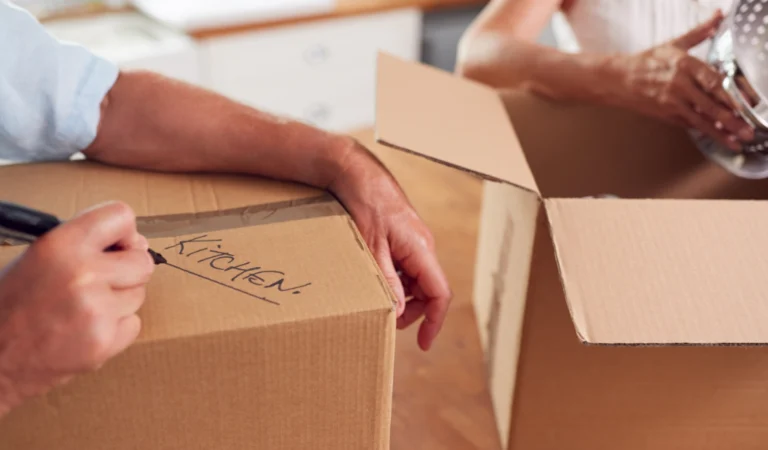
Full-service packing means a professional crew packs your belongings for you – bringing the boxes, paper, and protective materials, wrapping and boxing everything room by room, and labeling as they go. Depending on the service, it can cover the whole home or just the parts you’d rather not handle. The value isn’t only the hours saved; it’s that fragile and awkward items get packed by people who pack them every day. Fatboy Slims Moving offers this through our packing services, for full homes or targeted rooms.
When DIY packing makes sense
Packing yourself is a reasonable choice when:
- Your move is small or simple – a studio or one-bedroom without much fragile or high-value property.
- You have time before the move – enough runway to pack steadily instead of in a panic the night before.
- Budget is the top priority – and you’re willing to trade your hours to save the labor cost.
- You don’t have many fragile or specialty items – fewer breakables means less risk in your own hands.
If that’s your situation, DIY can work well – especially if you pack smart. Our guides on packing valuable items safely and where to buy moving boxes and supplies cover how to do it right.
When it’s worth paying for packing
Professional packing tends to pay for itself when:
- You’re short on time. A tight timeline or a demanding job makes days of packing impractical, and rushed packing is where things break.
- You have a lot of fragile or high-value items. China, art, electronics, and glassware are exactly what pros pack better than most of us.
- It’s a long-distance move. Goods on the road for days take more handling, so professional packing lowers the risk of transit damage.
- The home is large. The bigger the household, the more the hours and stress add up in your favor.
- The move is for a senior or during a hard season of life. Sometimes the labor and stress relief is the whole point.
In these cases, the cost of packing is often less than the cost – in time, stress, or broken belongings – of doing it yourself.
The hybrid option most people overlook
Full-service and DIY aren’t the only two choices. A partial or fragile-only approach lets you pack the easy, low-risk items yourself – books, linens, clothes – and pay pros to handle just the kitchen, the art, the electronics, or whatever you’d most hate to break. It’s often the best value: you save on the bulk of the work while protecting the items where a mistake costs the most. If you’re on the fence, this is frequently the smart middle path.
What professional packing costs
There’s no flat rate, because packing cost tracks the size of your home, how much you’re packing, and the materials involved. The main factors:
- How much is being packed – the whole home versus a few rooms.
- Home size – more rooms and belongings mean more labor and materials.
- Fragility and specialty items – delicate or high-value pieces take more time and protection.
- Materials – boxes, paper, and specialty containers.
The way to compare fairly is to get a packing quote based on your actual home and set it against an honest estimate of your own time and the risk of DIY breakage. Our Colorado Springs moving company team can quote packing alongside your move so you see the real number.
Frequently asked questions
Is professional packing worth the money?
It’s worth it when time, fragility, or distance raise the stakes – a tight schedule, a home full of breakables, a long-distance move, or a large household. For a small, simple move with time to spare, DIY can be the better value.
How much do packing services cost?
There’s no single price; it depends on how much you’re packing, your home’s size, the fragility of your items, and materials. The accurate figure comes from a quote based on your specific home.
Can I pack some things myself and have movers pack the rest?
Yes – partial or fragile-only packing is common and often the best value. You handle the easy items and pay pros to protect the fragile or high-value ones.
Do movers insure items they didn’t pack?
Coverage can differ for items you packed yourself versus items packed by the crew, so ask your mover how valuation applies to owner-packed boxes before you decide who packs what.
Make the call that fits your move
Full-service packing vs. DIY isn’t about which is universally better – it’s about which fits your time, your budget, and what you’re moving. Weigh those honestly, and don’t forget the hybrid option that protects your fragile items without paying to pack the easy ones. Get a moving estimate from Fatboy Slims Moving and get a packing quote built around your home.