

Moving to a Colorado Mountain Town: What to Expect
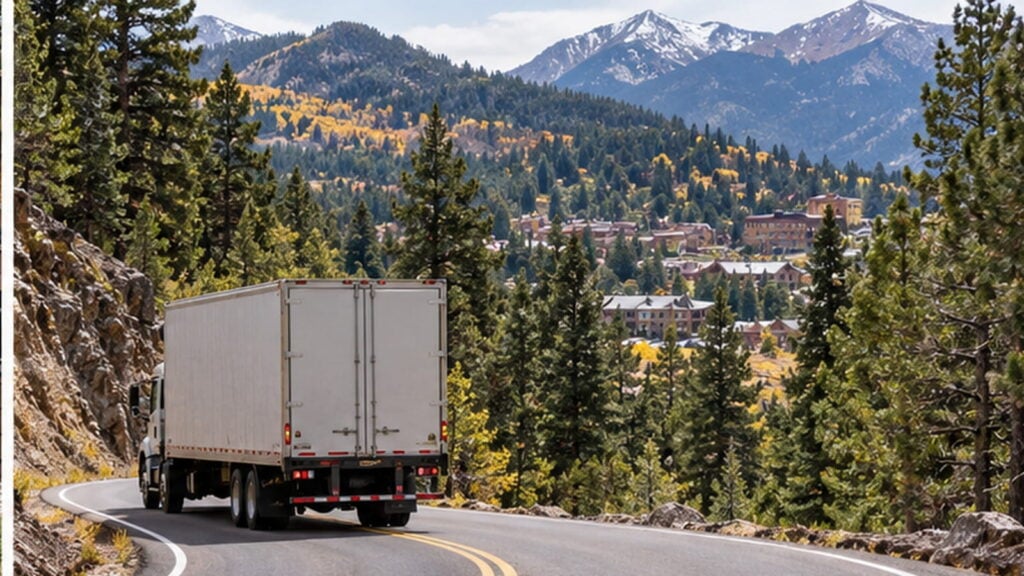
Moving to a Colorado mountain town is not the same as moving across a front-range suburb, and the differences show up on move day whether you planned for them or not. If you’re relocating to Evergreen, Conifer, Woodland Park, Monument, or Black Forest, the challenges that define a mountain move – narrow switchback roads, steep and tight driveways, sudden weather, and elevation – all land on the crew and the truck at once. This guide covers what actually changes when you move up the hill, and how an experienced mover plans around it so your belongings arrive intact and on schedule.
Get these factors right ahead of time and a mountain move goes smoothly. Ignore them and you risk a truck that can’t reach the house, a delivery delayed by weather, or a long, expensive carry nobody budgeted for.
What makes a mountain move different from a front-range move
On the front range, a mover can usually count on wide streets, a driveway a full-size truck can back into, and predictable weather. Up the hill, none of that is guaranteed. The same household goods, the same mileage on paper, can take longer and require different equipment simply because of how the property is reached.
The result is that mountain moves reward planning and local knowledge far more than a flat, in-town move does. The crew has to know before they arrive whether the truck fits, where it can park, how long the carry is, and what the weather is doing.
Road and access realities
Access is the single biggest variable in a mountain-town move.
- Narrow and winding roads. Switchbacks and tight mountain roads can limit the size of truck that can safely reach a home, sometimes requiring a smaller shuttle vehicle to ferry goods the last stretch.
- Steep, tight driveways. A driveway that’s fine for a car may be too steep, too narrow, or too soft-shouldered for a loaded moving truck to back up safely.
- Long carries. When the truck can’t get close, everything has to be carried farther – which affects both time and cost.
- Turnaround and parking. Somewhere the truck can actually stop, load, and turn around matters as much as the route in.
The fix is simple but essential: the property has to be assessed before the move so the right vehicle and crew show up. A local mover asks these questions up front instead of discovering the problem in the driveway.
Weather and season
Mountain weather doesn’t follow the calendar the way the plains do. Snow and ice can arrive early and late, spring “mud season” turns unpaved access roads soft, and afternoon storms roll in fast in summer.
What that means for a move:
- Timing matters. The window you pick affects how likely weather is to interfere, especially on unpaved or steep access.
- Traction and safety. Loading heavy items on a slick surface is a hazard; a good crew adjusts rather than forcing it.
- Build in a buffer. Weather delays are more likely up the hill, so a little schedule slack protects the rest of your plans.
Elevation and move day
Elevation is easy to forget until you’re carrying boxes at altitude. For anyone moving up from a lower elevation, the thinner air makes heavy work noticeably harder and slower – one more reason the physical labor of a mountain move is better handled by a crew that does it every week and paces the day accordingly. It also affects timing: a move that would take a set number of hours in town can run longer simply because the work is harder.
Rural-property quirks worth planning for
Many mountain homes come with practical details a town move never touches. Well and septic systems, propane, gated or shared private roads, and rural-route addressing can all affect access and scheduling. None of these are dealbreakers, but they’re worth confirming ahead of time – particularly gate codes, shared-road rights, and exactly where a large vehicle is allowed to go. A quick pre-move walkthrough of the route and the drop-off catches these before they become move-day surprises.
How a local mover plans around all of it
Pulling it together, an experienced mountain-town crew plans for the property, not just the mileage. That means confirming truck access and lining up a shuttle if needed, watching the forecast and building in a buffer, sizing the crew for long carries and altitude, and walking the route in advance. Fatboy Slims Moving handles relocations throughout the Colorado mountain communities through our local moving service, including tight-access areas like Evergreen and Woodland Park.
For a step-by-step framework to keep the rest of your move organized around these factors, use our moving checklist.
Frequently asked questions
Do movers charge more for mountain or rural moves?
They can, because access often drives cost more than distance does. Steep or narrow driveways, long carries, shuttle trucks for tight roads, and weather buffers all add time and equipment – which is why an accurate quote depends on the specific property, not just the mileage.
What’s the best time of year to move to the Colorado mountains?
The window with the lowest weather risk for your specific access. Snow and ice complicate steep and unpaved routes, and spring mud season softens dirt roads, so timing around your driveway and access road matters more than a general “best month.”
Can a full-size moving truck reach my mountain home?
Sometimes, but not always. Narrow switchbacks and tight driveways can require a smaller shuttle vehicle to cover the last stretch. The only reliable way to know is a route and property assessment before the move.
Planning a move up the hill?
A Colorado mountain-town move comes down to access, weather, and planning – get those right and the rest follows. A crew that knows these roads and properties will spot the problems before they cost you time or money. Get a moving estimate from Fatboy Slims Moving and move up the hill with a team that plans for the terrain.